
Vitamin deficiency testing in Solihull and result times
Vitamin blood test turnaround usually includes laboratory processing time and the time it takes to transport the sample. At-home tests commonly return results within a few working days after the sample reaches the laboratory. For vitamin deficiency testing in Solihull, the collection method can affect how quickly the sample gets there.
It’s understandable to want a clear timeline when seeking answers about your health. Most vitamin and mineral tests don’t require special preparation, although some nutrition panels require fasting. A blood sample is usually taken from a vein, unless the chosen test uses another collection method.
Read on to learn which tests may be available, how samples are collected and what can affect result times. You’ll also find out how private vitamin D testing works in Solihull, when it may be appropriate and how to arrange a test, so you can understand the process before choosing your next step.
Table of Contents
How quickly will I receive my blood test results in Solihull?
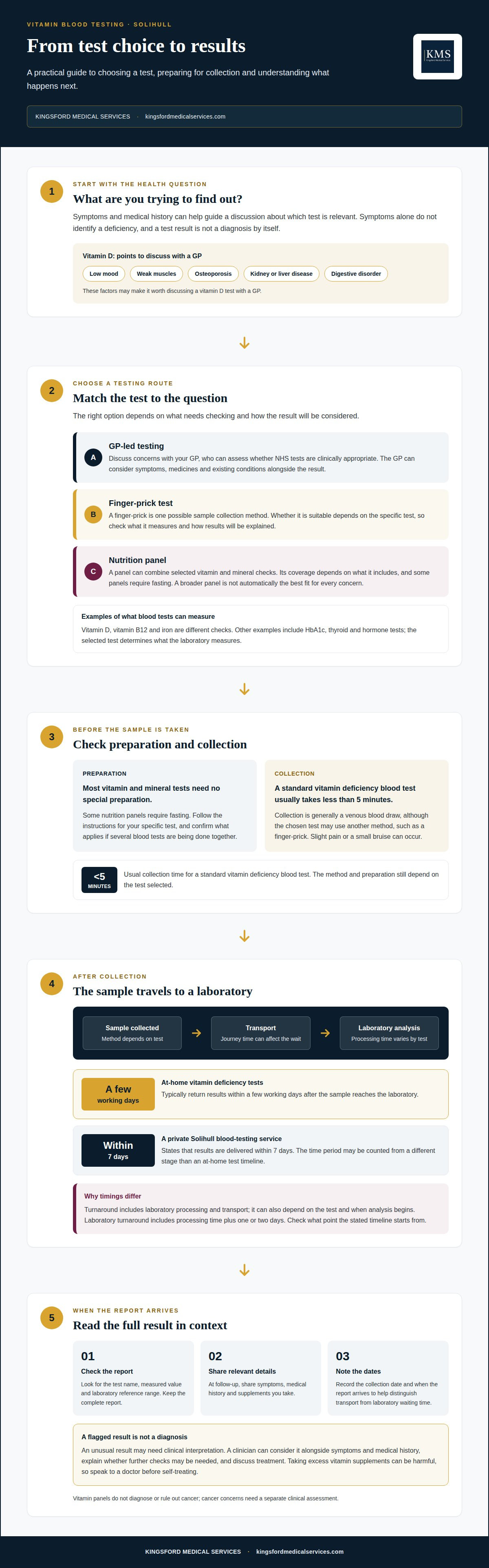
Laboratory turnaround includes processing time, plus one or two days. The total depends on the test, sample transport and when analysis begins. At-home vitamin deficiency tests typically return results within a few working days. That period starts after the sample reaches the laboratory. A private blood-testing service in Solihull states that results are delivered within 7 days. These timelines may count from different stages, such as sample collection or laboratory receipt.
When your report arrives, read it in full rather than focusing only on a low or high flag. It should show the test name, measured value and laboratory reference range. These details help a GP interpret the result in context. At a follow-up appointment, share the complete report and describe any symptoms. Include relevant medical history and supplements you take, as these details help the clinician review your results. An unusual result may need interpretation; by itself, it doesn’t confirm a disease or diagnosis.
Vitamin blood tests measure a level in the sample provided. Accuracy depends on selecting the relevant test and collecting and processing the sample correctly. Symptoms and medical history also inform how the result is interpreted.
For a useful record, note the collection date and when your report arrives. This helps distinguish the time spent waiting for laboratory analysis from the time taken to transport the sample. Keep the original report, including test names and reference ranges, to share with your GP. If you have several results, their dates help the clinician review them in sequence.
A clinician can explain a deficiency result and discuss treatment in light of your symptoms and medical history, including whether further checks may be needed. The result alone doesn’t establish the cause. Taking excess vitamin supplements can be harmful, so speak to a doctor before self-treating. With vitamin deficiency testing in Solihull, a follow-up consultation can help you understand the findings and consider next steps.
Blood sample collection
A standard vitamin deficiency blood test usually takes less than 5 minutes. Collection is generally a venous blood draw, with a needle taking a sample from a vein. The chosen test may use a different method, such as a finger-prick sample. Most vitamin and mineral tests carry little risk, although slight pain or a small bruise can occur at the collection site. These practical details can help you know what to expect before your appointment.
Preparation depends on the test. Most vitamin and mineral tests need no special preparation, so you can generally eat and drink as usual. Some nutrition panels require fasting. Follow the instructions for your specific test, as eating beforehand could affect whether a fasting panel is suitable. If you’re having several blood tests together, confirm which preparation applies to the whole set.
Private blood testing in Solihull may include individual tests or a health screening panel. The required sample and any preparation depend on what the panel measures. For example, iron testing can assess a different marker from vitamin D testing. Diabetes testing with HbA1c assesses how blood sugar has been managed over several months. Thyroid and hormone tests are other examples of blood tests, but the chosen test determines what the laboratory measures.
Before collection, the selected test should match the health question being explored. A panel can combine several checks, while an individual test focuses on a particular measurement. A broad panel isn’t automatically the best fit for every concern. Share relevant symptoms and medical history during a consultation so the clinician can consider which tests are appropriate and whether fasting instructions apply.
After collection, the sample is sent to a laboratory for analysis. Keep the test name and any preparation instructions together, particularly if your appointment includes both vitamin and hormone tests. This helps you understand which result relates to each part of the assessment.
GP, finger-prick and nutrition panel tests
Vitamin D, vitamin B12 and iron tests measure levels that can influence energy, mood and immunity. A GP consultation can help match the test to symptoms and medical history. For NHS testing, discuss your concerns with your GP, who can assess whether tests are clinically appropriate. Private vitamin B12 testing does not require an NHS GP referral.
GP and finger-prick testing
A GP-led approach connects test results with symptoms, medicines and existing conditions. Finger-prick tests are another way to collect a sample, but the suitable method depends on the specific test. Check what the test measures and how the results will be explained. A result is one part of an assessment, not a diagnosis on its own.
Nutrition panel tests
A nutrition panel can combine checks for selected vitamins and minerals, giving a broader view than an individual test. What it can assess depends on the panel’s contents, so check whether it covers the nutrient related to your concern. Some panels require fasting, unlike most vitamin and mineral tests. Follow the preparation instructions for the panel you choose.
Choosing tests by symptoms
Symptoms can inform a discussion, but they don’t identify a deficiency by themselves. Low vitamin D may be associated with low mood or weak muscles. It may also be worth discussing a vitamin D test with a GP if you have osteoporosis, kidney or liver disease, or a digestive disorder. Share your symptoms and relevant conditions during a consultation so test choices take your medical context into account.
Private vitamin blood tests are different from cancer tests. A vitamin panel does not diagnose or rule out cancer, so cancer concerns need a separate clinical assessment. Persistent tiredness can have several possible causes; a clinician can consider whether vitamin, iron or other checks are appropriate before discussing treatment.
Private vitamin D deficiency testing in Solihull
Private testing can measure your vitamin D level and provide a report to discuss with a clinician. The result needs to be considered in context, including your symptoms, health history and possible risk factors.
Private vitamin D testing
In Solihull, a private blood-testing service states that results are delivered within 7 days. Local private testing uses UKAS-accredited laboratories. Turnaround depends on sample collection, transport and laboratory processing, so the timeline may differ between services. Check what the report includes and how results will be explained. A number alone cannot establish why a level is low or what treatment is appropriate.
Testing may be worth discussing if you rarely get sunlight, spend a lot of time indoors, cover your skin or have darker skin. Osteoporosis and conditions that affect how the body uses vitamin D may also be relevant. Share these factors during a clinical consultation, alongside your symptoms and medicines. This helps put the measured level into context rather than treating the result in isolation.
Testing risks and limitations
A blood draw can cause slight pain or a small bruise where the needle enters. A test measures the level in that sample; it doesn’t diagnose the cause of symptoms by itself. At-home tests provide information, not a diagnosis. Ongoing symptoms need clinical assessment, even if a result falls within its reference range.
Results need to be interpreted alongside your health history and the laboratory’s reference range. Low mood or weak muscles may accompany low vitamin D, but symptoms alone cannot confirm a deficiency. Taking excessive supplements can be harmful, so discuss the result and possible treatment with a doctor before self-treating. If you’re monitoring a known deficiency, repeat testing can help assess progress over time.
For a measured result and a clear discussion of what it means, call us to arrange a private GP appointment. A clinician can explain the findings and consider suitable next steps.
Kingsford Medical Services: Vitamin B12 Testing & Treatment
Kingsford Medical Services offers Vitamin B12 Testing & Treatment for people who need assessment of possible B12 deficiency or support after a result. A consultation can help place the finding alongside symptoms and medical history, then discuss suitable next steps. Vitamin B12 is distinct from vitamin D, so a B12 assessment is relevant when the concern or result relates to B12.
If your test identifies low B12, or symptoms prompt questions about your levels, a clinician can explain the result and discuss treatment options. Bring your test report and relevant details about supplements or medicines to support that conversation. This helps keep the discussion focused on your individual circumstances.
For guidance about Vitamin B12 Testing & Treatment, contact Kingsford Medical Services to discuss your needs.
Take a considered next step
A test is most useful when it answers a clear health question. Before arranging vitamin deficiency testing in Solihull, consider what you want to understand and whether you need help choosing a test. A clinician can discuss your symptoms, health history and concerns, then help you understand what the result may mean for your next decision.
If you’re unsure whether to test first or have a clinical discussion, a Private GP Appointment gives you the chance to talk through your concerns. Bring questions about symptoms, previous results or possible follow-up. This keeps the next step focused on your needs, rather than treating a test result in isolation.
Arrange a Private GP Appointment to discuss your concerns with Kingsford Medical Services. A thoughtful conversation can help you move forward with greater clarity.
Frequently Asked Questions
How long do results take, and how do I get them?
Turnaround depends on the test and when the laboratory receives your sample. At-home test results typically arrive within a few working days after laboratory receipt; processing time plus one or two days is another stated timeframe. A private testing service in Solihull states results are delivered within 7 days. Keep the complete report, including reference ranges, so you can discuss the findings with a clinician.
Why might I need a vitamin deficiency test?
A test can help investigate symptoms or assess the risk of low vitamin levels. For example, low vitamin D may be associated with low mood or weak muscles. Spending little time outdoors, having darker skin and covering up can also be relevant factors. Share your symptoms, health conditions and usual sun exposure during a consultation; these details can help inform which test may be useful.
How often should I retest?
Retesting every 3-6 months can help monitor progress when correcting a known deficiency. For general vitamin monitoring, once a year is a common interval. The purpose of testing matters: follow-up checks can assess a previously identified concern, while routine monitoring has a different aim. Keep earlier reports available, because comparing dated results can help a clinician understand how levels have changed.
Looking for a specific test?
Vitamin D, vitamin B12 and iron tests assess different nutrient levels, so the right option depends on the health question. If you’re considering a combined nutrition panel, look at which nutrients it includes and whether its preparation instructions involve fasting. A clinician can discuss symptoms and relevant medical history before helping you understand which individual test or panel fits your concern.
Should I just take a supplement instead of getting tested?
Don’t take high doses to treat symptoms without medical advice. Excess vitamin supplements can be harmful, and symptoms such as tiredness or low mood can have different causes. A test may help clarify whether a deficiency is present, while a clinician can consider the result alongside your health history. If you already take supplements, include their names and doses in the discussion.
Where can I get vitamin deficiency testing in Solihull?
Kingsford Medical Services is based in Knowle, Solihull, and offers Private GP Appointments and Vitamin B12 Testing & Treatment. A private GP appointment can provide a setting to discuss vitamin D concerns, symptoms and what assessment may be appropriate. If your concern is specifically vitamin B12, the clinic’s testing and treatment service is directly relevant to that need.



Comments