
Sunday doctor appointment in Knowle: weekend and evening care
For a Sunday doctor appointment in Knowle, start with the service suited to your need: contact your GP practice about routine care, and call 999 if someone’s life is at risk, according to NHS England. Sunday and evening access depends on the appointment route, so be ready to explain what help you need and when you can attend.
It’s understandable to want clear guidance when you’re unwell outside the usual weekday routine. This article explains how to arrange a Sunday doctor appointment in Knowle, what a weekend GP consultation may involve and how to prepare. You’ll also find practical tips for describing your symptoms clearly, so you can choose an appropriate next step.
Table of Contents
Routine evening and weekend GP appointments
A routine evening or weekend GP appointment is a consultation for a health concern that needs attention but is not immediately life-threatening. For a Sunday doctor appointment in Knowle, start by contacting your usual GP practice and following its appointment instructions. The practice’s phone message or published information directs patients to the relevant route when the surgery is closed. This first step helps distinguish routine care from urgent support.
Evening and weekend access means appointments outside a practice’s usual weekday schedule. Kingsford Medical Services is open seven days a week, including Sundays, and offers same-day and next-day GP appointments. Explain whether your concern is new, ongoing or worsening. For example, a persistent cough differs from sudden severe breathing difficulty, which needs urgent attention. Clear details help the clinician guide the next step.
Triage is the process of assessing a request so care can be prioritised according to clinical need. When booking, describe the main symptom, when it began and how it affects daily activities. Mention any marked change, such as worsening pain or difficulty breathing. These details help the clinician decide what care is appropriate, which may include an appointment or other advice.
Urgent and routine requests follow different priorities, so the appropriate response depends on the concern and its assessment. A routine request is for a problem suitable for planned review, such as recurring skin irritation. An urgent request describes a problem needing prompt attention, such as rapidly worsening symptoms. State the change clearly when you call. Don’t describe a serious or rapidly developing problem as routine simply because you prefer a particular appointment time.
A routine appointment gives a clinician time to assess a non-emergency concern, review relevant history and discuss next steps. Before the consultation, prepare a concise account: explain the symptom, when it started and what makes it better or worse. If you have several concerns, lead with the one affecting you most. This helps the clinician focus the consultation and identify what needs attention first.
For a medical or mental health emergency when someone’s life is at risk, NHS practice says to call 999, according to NHS England. Use that emergency route rather than waiting for a routine GP appointment. For other concerns, contact the practice and describe the symptoms plainly. A clear distinction between immediate danger, urgent change and a stable routine problem helps patients reach the appropriate care pathway.
Telephone and in-person appointment requests
A telephone request is a call to arrange an appointment or discuss a health concern. Before calling, note the main reason, when the problem began and whether it has changed. For example, explain that a cough has persisted rather than saying only that you feel unwell. This helps the clinician understand your concern and direct it appropriately.
Reception staff ask patients about the reason for an appointment to help provide appropriate care and prepare the doctor. Give a concise account, then answer follow-up questions as clearly as you can. Mention the symptom causing the greatest concern first. If you’re calling on behalf of someone else, explain your relationship and describe what they’ve told you or what you’ve observed.
An in-person request is a visit to reception to ask about arranging care. It can suit patients who cannot make a call or need help explaining their request. Tell staff whether you’re seeking an appointment for yourself or another person. If the patient is present, they can describe their symptoms directly; otherwise, share relevant details without guessing at information you don’t know.
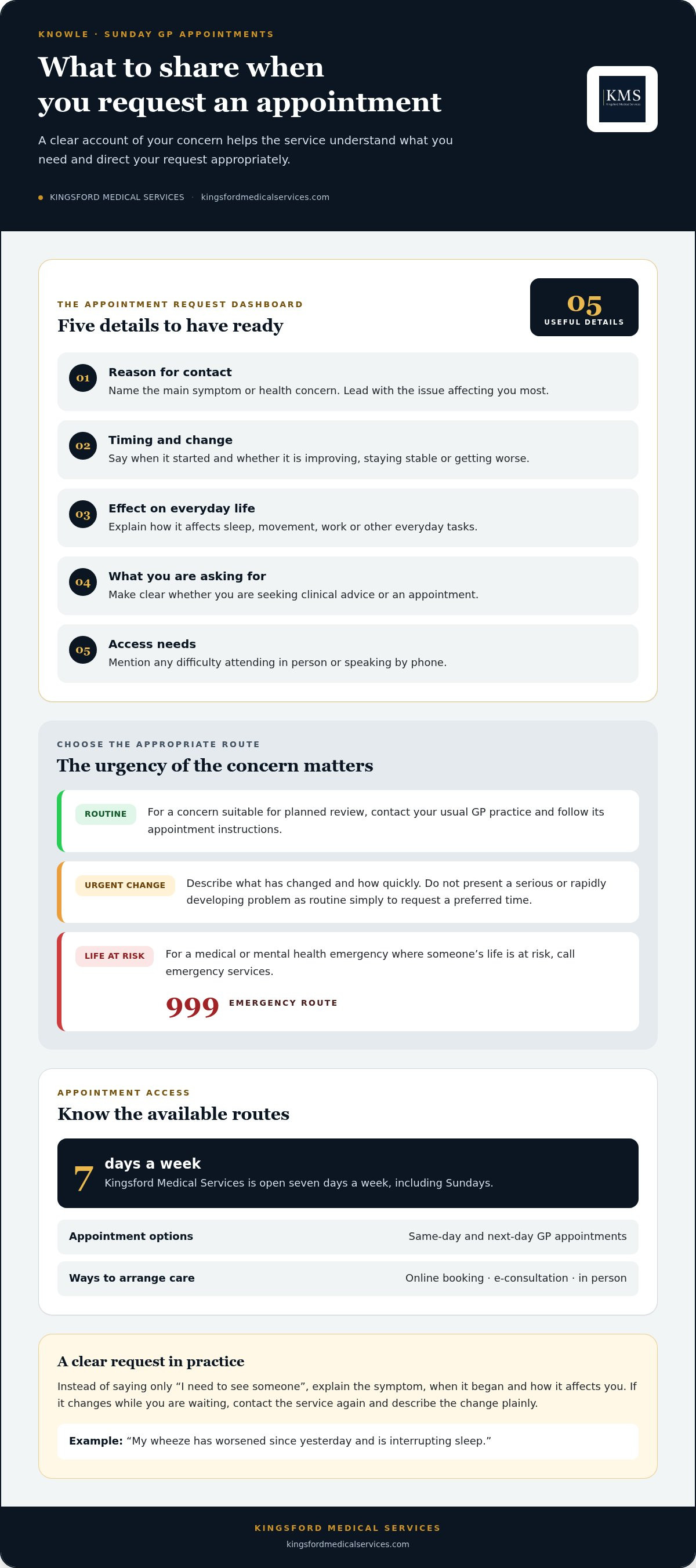
For either route, have practical details ready before speaking:
Reason for contact: Name the main symptom or health concern.
Timing: Explain when it started and whether it is improving, stable or worsening.
Effect: Describe how it affects sleep, movement, work or everyday tasks.
Request: Say whether you’re asking for clinical advice or an appointment.
Access needs: Explain any difficulty attending in person or speaking by phone.
Specific details give the clinician a clearer picture than a broad request such as “I need to see someone”. If a symptom changes while you’re waiting for an appointment, contact the service again and describe what has changed. New difficulty breathing, for instance, is more informative than simply repeating that the original cough remains. Describe events plainly and don’t minimise a change that concerns you.
At the end of the conversation, repeat the next step in your own words. Make sure you understand whether you’re waiting for a call, attending an appointment or following advice. If you’re asking about private GP appointments, private GP care is another route to consider for a consultation. Keep any instructions from reception accessible, especially if another person will help you attend or manage follow-up.
How to book an appointment
Booking an appointment means arranging a consultation for a health concern. To book on a Sunday, contact the service you intend to use and follow its booking instructions. Kingsford Medical Services accepts online bookings and offers e-consultations as well as in-person appointments in Knowle. Don’t assume that every practice uses the same booking process.
Start with the symptoms, not the preferred appointment time. Write down what has changed, when it began and how it affects you. For example, say, “My wheeze has worsened since yesterday and is interrupting sleep,” rather than simply requesting a Sunday slot. Clear details help reception understand the reason for your request and direct it appropriately.
Use the contact method provided by the service. If you’re booking online, complete the form accurately and include a telephone number where you can be reached. If you call, keep your key details nearby. For an in-person appointment, explain briefly what the concern is when you arrange the visit.
Have these details ready before you begin:
Patient details: Give the name and identifying information requested by the practice.
Main concern: Describe the symptom or reason for review in plain language.
Timing and change: Say when it began and whether it is improving, stable or worsening.
Availability: Explain when you can attend and whether you have access needs.
Contact details: Provide a number or other requested method for a reply.
A booking confirmation tells you what happens next. Before ending a call or completing an online booking, make sure you understand the appointment time, location and any instructions. If the service will contact you, clarify how you’ll receive the response and what to do if your symptoms change beforehand. Keep the details together so you can refer to them easily.
If your preferred booking method doesn’t suit your circumstances, explain why and use another available route. For instance, if you cannot use an online form, call the clinic to discuss arranging an appointment. Avoid sending repeated requests through different channels without mentioning earlier contact, as this can make the timeline harder to follow.
After booking, note the appointment details and prepare the information relevant to your concern. If you need to change or cancel, use the service’s stated contact route and give your appointment details. This allows the clinic to update the booking and advise you about the next appropriate step.
Which nearby areas offer Sunday GP appointments for Knowle residents?
A nearby Sunday GP option can make it easier to access care outside your immediate neighbourhood. For a Sunday doctor appointment in Knowle, proximity alone doesn’t determine whether an appointment is suitable. Consider the service’s booking arrangements, your circumstances and whether the consultation is in person or remote. Kingsford Medical Services is based in Knowle, Solihull, and offers Sunday appointments as well as online consultations.
Knowle residents should distinguish a nearby surgery from a service that accepts their appointment request. A surgery may be close on a map, but location by itself doesn’t explain its booking process. Read the service’s access information and follow its stated route. If it directs you to a specific appointment service, use that route rather than travelling to an unfamiliar building without an appointment.
Travel is another practical consideration for an in-person consultation. Before accepting a Sunday slot, check the appointment address, journey options and whether you can arrive at the required time. For example, a patient relying on a lift should arrange transport before confirming attendance. If travel is difficult, explain this during the request so staff understand the constraint.
Use this simple sequence to assess a local option:
Start with the contact and weekend-care instructions from your usual Knowle practice.
Identify the named service or location provided in those instructions.
Establish whether the consultation is in person or remote.
Consider travel, accessibility and the time needed to attend.
Keep the appointment details and any attendance instructions together.
If you choose a service outside your neighbourhood, use the contact details and location provided when you book. Don’t assume that a service serving nearby communities automatically takes every request. The appointment confirmation is the guide to where you should go and how to make contact.
Knowle residents can weigh convenience against the type of care needed. A remote consultation may avoid a journey, while an in-person appointment involves attending the clinic. Explain your concern when booking, because the nature of the problem can affect the suitable consultation format. If symptoms may need physical assessment, describe the relevant signs rather than choosing solely by distance.
Before setting off, read the confirmation carefully and note the service name, address and appointment time. If the instructions give a different contact route for changes, use it promptly. These steps help prevent a wasted journey and keep your Sunday appointment organised around the service arranged for you.
What information should I bring to a Sunday doctor appointment?
A useful appointment record is a concise account of your symptoms, health history and current treatment. Before a Sunday consultation, gather the information you may need, whether you’re attending in person or joining remotely. A short note on your phone can help you explain the concern clearly, especially if you feel uncomfortable or forget details under pressure.
A symptom timeline records when a problem began and how it has changed. Note whether it started suddenly or gradually, and describe any pattern. For example, record whether a headache appears after a particular activity or whether a cough disrupts sleep. Include what makes the symptom better or worse, and explain its effect on everyday tasks.
A medicines list records the treatments you currently take, including prescribed medicines and products bought over the counter. Bring the packaging or write down each medicine’s name and how you use it. Include inhalers, creams, vitamins and supplements. If you’ve recently stopped a medicine or changed how you take it, add that detail for the clinician.
Your medical history is a summary of relevant past or ongoing health conditions. Mention previous diagnoses, operations, allergies and reactions to medicines. If a relative is attending with you, ask them to help recall details, but correct anything that doesn’t match your experience. A record of a previous similar episode can also help explain what has changed.
Prepare these practical details:
Appointment information: Keep the confirmation, location and any attendance instructions accessible.
Current treatment: List medicines, doses as shown on packaging, and any recent changes.
Symptom notes: Record the start, pattern, severity and effect on daily activities.
Relevant records: Bring letters, test results or care plans related to this concern.
Questions: Write down what you need explained, such as treatment options or follow-up.
Relevant records are documents that relate directly to the reason for your visit. For example, a letter about a previous respiratory assessment may be useful for a consultation about ongoing breathing symptoms. You don’t need to bring unrelated paperwork. If you’re unsure which document matters, prioritise recent information connected to the current concern.
Before the appointment, choose the main issue you want addressed and place it first in your notes. If you have several concerns, list them in order of importance. Bring glasses or hearing aids if you use them, and arrange support if you need help communicating. These small preparations make it easier to share accurate information and understand the clinician’s advice.
Kingsford Medical Services: Respiratory & Sleep Medicine Consultations
Kingsford Medical Services offers Respiratory & Sleep Medicine Consultations for people seeking assessment of breathing or sleep concerns. This can be a suitable next step when you need a focused consultation about symptoms such as snoring, fatigue or breathing difficulties. Bring a clear account of when symptoms occur and how they affect daily life, along with relevant medical information.
For a child who needs care, Kingsford Medical Services also offers Paediatric Services. The appropriate appointment depends on the concern being discussed and the information available to the clinician. These consultations are not an emergency response: if someone’s life is at risk, call 999.
Choose the next step that fits your care
If you’re arranging a Sunday doctor appointment in Knowle, choose the route that best fits your concern. For ongoing symptoms, prepare a clear account and consider whether a focused consultation would help you discuss them in more depth. Kingsford Medical Services offers private GP appointments and specialist consultations in Knowle, Solihull. The right next step starts with the reason you need care, not simply the day you hope to attend.
Kingsford Medical Services offers Private GP Appointments, Respiratory & Sleep Medicine Consultations and Paediatric Services. These options suit adults seeking a private GP consultation, people with respiratory or sleep concerns, and families looking for paediatric care. Choose the service that most closely matches the reason for your appointment, and have relevant health information ready for the discussion.
Contact Kingsford Medical Services to discuss the care you’re seeking. Taking that first step can help you move forward with a clearer plan and greater confidence.
Frequently Asked Questions
Who do I see?
For a non-emergency concern, a GP is usually the right clinician to assess your symptoms and advise on next steps. For example, a new rash or a recurring cough can be discussed with a GP, who can consider whether specialist assessment is appropriate. For breathing or sleep concerns, a respiratory and sleep medicine consultation may be relevant. If someone’s life is at risk, call 999 rather than waiting for an appointment.
Which GP practices in Knowle offer appointments on Sundays?
Kingsford Medical Services is a private GP clinic in Knowle, Solihull, with Sunday opening hours. Its address is 6 Wilsons Road, Knowle, B93 0HZ. It offers private GP appointments alongside specialist consultations. Check that the appointment arrangements suit your needs before travelling, and use the clinic’s contact details for booking. This gives Knowle residents a local private option without implying that every nearby surgery provides Sunday appointments.
How can I book a Sunday doctor appointment in Knowle?
To book a Sunday doctor appointment in Knowle, contact the service you intend to use through its stated booking route. For Kingsford Medical Services, call 01564 781715 or use its online booking option. Have your main concern and relevant medical details ready. For example, explain whether a symptom is new or ongoing, and mention any change that affects your daily activities. This helps make your request clear.
What are the opening hours for Sunday medical services in Knowle?
Kingsford Medical Services is open on Sunday from 10:00 AM-4:00 PM. Its other opening hours are Monday-Friday 8:00 AM-8:00 PM and Saturday 9:00 AM-5:00 PM. These are the clinic’s opening hours, so use its booking route to arrange a consultation within the relevant hours. If you’re travelling from elsewhere in Solihull, Birmingham or Nuneaton, note the address before setting off.
Can NHS patients get a Sunday GP appointment in Knowle?
Yes. Being an NHS patient doesn’t prevent you from arranging a private GP consultation. Kingsford Medical Services is a private clinic and complements, rather than replaces, your NHS GP. You can continue using your NHS practice for NHS care and arrange a private appointment separately. For instance, you might seek a private consultation to discuss a concern while keeping your usual GP informed about relevant care.



Comments