
Private high blood pressure care in Solihull
A single high blood pressure reading is a signal to investigate, not the whole picture. According to the NHS, a reading of 140/90 mmHg or higher is classified as hypertension. For people managing high blood pressure privately in Solihull, careful assessment can help establish whether readings are consistently raised or affected by the clinical setting.
It’s understandable to feel concerned when a reading is high, especially if you feel well. High blood pressure often causes no noticeable symptoms, so accurate checks matter. A 24-hour ambulatory monitor can help distinguish sustained hypertension from white coat hypertension, where readings rise in a clinical setting.
This article explains what hypertension is, how clinic checks and monitoring contribute to diagnosis, and which investigations may be considered. It also covers practical lifestyle changes, including diet, activity and reducing salt, to support blood pressure management alongside treatment recommended after assessment.
Table of Contents
Distinguishing high blood pressure from white coat hypertension
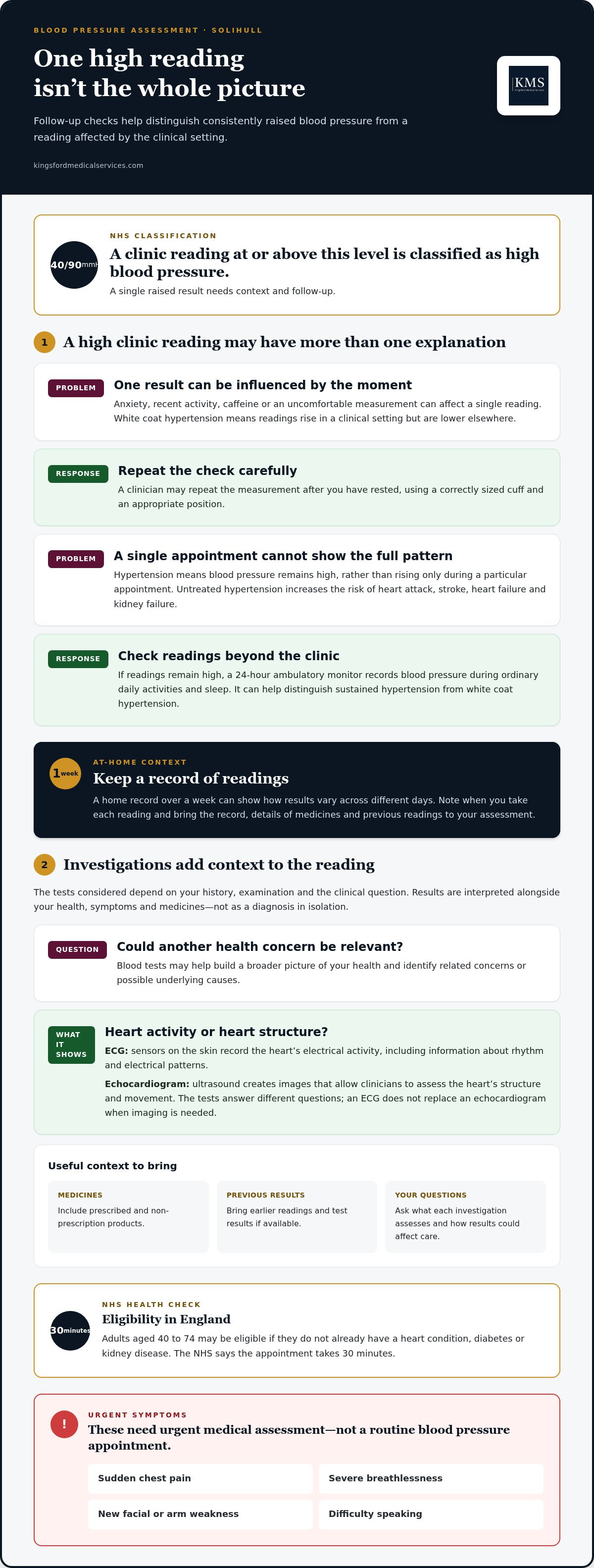
Hypertension means blood pressure remains high, rather than rising only during a particular appointment. A clinic reading of 140/90 mmHg or higher is classified as high blood pressure by the NHS. One raised result needs context: anxiety, recent activity, caffeine or an uncomfortable measurement can affect a single reading. Untreated hypertension increases the risk of heart attack, stroke, heart failure and kidney failure, so follow-up checks matter.
A clinician may repeat the measurement after you have rested, using a correctly sized cuff and an appropriate position. If readings remain high, a 24-hour ambulatory blood pressure monitor records them during ordinary daily activities and sleep. This helps distinguish sustained hypertension from white coat hypertension, where readings are raised in clinical settings but lower elsewhere. Bring details of medicines and previous readings to the assessment. A home record over a week can also show whether results vary across different days.
Investigations can look beyond a blood pressure reading. Depending on your history and examination, an assessment may include blood tests, an ECG or an echocardiogram. These can help identify related health concerns or possible underlying causes. Your family history, symptoms and current medication also help shape the next steps. At Kingsford Medical Services in Knowle, Solihull, a private GP appointment gives you time to discuss these details and a plan tailored to your needs, rather than relying on one isolated result.
According to the NHS, adults in England aged 40 to 74 who don’t already have a heart condition, diabetes or kidney disease are eligible for an NHS Health Check. The NHS says an appointment takes 30 minutes. A private consultation and an NHS Health Check are different routes; eligibility for the latter depends on those stated criteria.
A private clinician can assess whether blood pressure medication is appropriate and prescribe it when clinically indicated. Your appointment and any investigations are charged according to the service provided. Discuss the plan and any additional costs before proceeding.
Seek urgent medical help for sudden chest pain, severe breathlessness, new facial or arm weakness, or difficulty speaking. These symptoms need urgent assessment, not a routine blood pressure appointment.
Blood tests and cardiac investigations
A hypertension assessment may include investigations to help clinicians understand a person’s health and heart. These investigations complement blood pressure readings; they provide information a doctor can use alongside your medical history and examination. The exact tests depend on the clinical question, such as whether another health issue could be contributing to raised pressure or whether the heart needs closer assessment.
Blood tests can help build a broader picture of your health. Your doctor may interpret the results alongside existing conditions, prescribed medication and symptoms. Tell the clinic about all the medicines you take, including non-prescription products, and bring previous test results if available. This context helps avoid interpreting a result in isolation.
An ECG records the heart’s electrical activity using sensors placed on the skin. It can provide information about heart rhythm and electrical patterns. An echocardiogram uses ultrasound to create images of the heart, allowing clinicians to assess its structure and movement. The tests answer different questions, so an ECG does not replace an echocardiogram when imaging is needed.
Ask what each investigation is intended to assess and how the result could affect your care. Your doctor can explain whether further assessment, medication or lifestyle changes are being considered, and how the findings relate to consistently raised readings. Note your questions before the appointment, especially if you have noticed new symptoms or changes since your last review.
Test results are considered within your wider cardiovascular health. A clinician may review your history, examination findings and other risk factors when discussing possible complications, including stroke. The aim is to understand the overall picture, not to treat one test result as a diagnosis on its own. If an investigation identifies a concern, your doctor can explain what it means and what follow-up is appropriate.
Lifestyle changes and blood pressure management
Lifestyle changes can support blood pressure management alongside clinical care. If you’re managing high blood pressure privately in Solihull, start with one sustainable change, such as walking regularly or using less salt in home cooking. Building habits gradually can make them easier to maintain in everyday life.
Regular movement is one practical goal: 30 minutes on most days can support heart health. Brisk walking, cycling or active gardening are examples. If you’re currently inactive, begin at a manageable pace and build activity gradually. A clinician can help adapt your approach to your health, mobility and any other conditions.
Weight: If weight loss is appropriate, focus on realistic eating and activity habits rather than a restrictive diet.
Food: Reduce salt by checking labels and flavouring meals with herbs, spices or lemon.
Alcohol and caffeine: Review your intake and identify practical ways to cut down where needed.
Smoking: Stopping supports cardiovascular health; discuss suitable support with a clinician.
Monitoring helps you and your clinician understand how your routine relates to your readings. Keep a home record, note when you take each reading, and bring it to your next review. Consistent readings can help inform whether lifestyle changes or medication should be considered. Don’t change prescribed medication without discussing it with your prescriber.
Make your plan personal. For example, someone with kidney disease may need dietary advice that takes their wider health into account, rather than a generic menu. At reviews, discuss your readings, weight and progress, and adjust goals if circumstances change. A practical plan for managing high blood pressure privately in Solihull can combine sustainable lifestyle measures with appropriate clinical follow-up. These steps support ongoing care, but don’t replace urgent hospital assessment when acute symptoms need attention.
Private vs NHS blood pressure care in Solihull
In Solihull, NHS and private care can both support blood pressure assessment, but the routes and follow-up arrangements differ. Private care can complement your NHS GP, not replace them. Consider what you want assessed, how you prefer to arrange appointments and how relevant findings can be shared with your usual healthcare team.
For an NHS check in Birmingham and Solihull, a practice nurse or pharmacist can measure blood pressure. Adults over 40 without an existing high blood pressure diagnosis may also be able to get a check at a participating local pharmacy. Home monitoring is another option. These checks can identify a reading that needs further assessment, but a single measurement may not establish whether hypertension is persistent.
A private appointment gives you another route to discuss readings, symptoms, medication and investigations with a clinician. Before booking, organise your home readings and a current list of medicines. Consider what you want the appointment to address, what follow-up may be needed and how findings can be communicated to your NHS GP. This can help keep important information connected across different parts of your care.
Private care is not a replacement for urgent NHS services, and it doesn’t automatically remove the need for NHS follow-up. Someone with complex conditions, such as diabetes or kidney disease, may need coordinated care across their existing team. A private consultation can help clarify questions or review results while your ongoing care continues with the appropriate healthcare professionals.
Compare the practical differences: who will assess you, what investigations may follow, how results are explained, and who reviews treatment over time. There is no single best route for every person. If you want to discuss a private assessment of raised readings, explore a private blood pressure consultation and consider how its follow-up would fit with your current care.
Kingsford Medical Services: Respiratory & Sleep Medicine Consultations
Kingsford Medical Services offers Respiratory & Sleep Medicine Consultations for people who want to discuss breathing or sleep concerns alongside raised blood pressure. These consultations focus on respiratory and sleep health, including symptoms such as disrupted sleep or ongoing breathing difficulties. They do not replace a hypertension assessment or urgent care when symptoms need immediate attention.
If sleep or respiratory problems are affecting your wellbeing, a consultation can give you time to discuss your concerns with a clinician. Note your symptoms and questions so you can explain what has changed and what support you’re seeking. For blood pressure management, continue to follow the assessment and treatment plan agreed with your healthcare professional.
Contact Kingsford Medical Services to discuss Respiratory & Sleep Medicine Consultations.
Take a considered next step for your health
Make your next step practical: gather recent readings, note your symptoms and medicines, and decide what you want a clinician to clarify. This gives your consultation a clear focus, whether you’re discussing a new concern or how different health needs fit together. If you’re managing high blood pressure privately in Solihull, a private GP appointment at Kingsford Medical Services can help you discuss your concerns and appropriate next steps.
Kingsford Medical Services offers Private GP Appointments and Respiratory & Sleep Medicine Consultations, as well as Paediatric Services for children’s healthcare needs. Choose the service that best matches the concern you want to discuss. Respiratory or sleep symptoms may also be relevant to a wider conversation about your health.
Contact Kingsford Medical Services to discuss your next step. A clear conversation can help you move forward with greater confidence.
Frequently Asked Questions
What is hypertension?
Hypertension is persistently raised blood pressure, which places extra strain on the heart and blood vessels. A reading contains two figures: systolic pressure as the heart pumps, and diastolic pressure between beats. Consider both figures in context rather than treating one result as the whole picture. Your clinician can explain what your readings mean in light of your health history.
What are the symptoms and risks of high blood pressure?
High blood pressure often has no noticeable symptoms, so feeling well doesn’t rule it out. If left untreated, it can increase the risk of heart attack, stroke, heart failure and kidney failure. Don’t wait for symptoms before arranging routine checks. Sudden chest pain, severe breathlessness, facial or arm weakness, or difficulty speaking needs urgent medical attention, not a routine appointment.
How is high blood pressure diagnosed and what readings count as high in the UK?
The NHS classifies a clinic reading of 140/90 mmHg or higher as hypertension. A clinician may repeat a raised measurement and use a 24-hour ambulatory monitor to assess readings during normal activities and sleep. This can help identify whether pressure is consistently high or rises mainly in a clinical setting. Bring home readings to your appointment, noting when you took them.
How much does a private blood pressure check or consultation cost in Solihull?
This is the appointment fee, not a stated price for a standalone blood pressure check. Diagnostic tests may have separate fees, depending on what is clinically appropriate. Ask for a breakdown of any additional costs before proceeding.
What private high blood pressure treatment and follow-up services are available in Solihull?
Kingsford Medical Services offers Private GP Appointments, where you can discuss your readings, health history and suitable next steps. The clinic also provides blood tests and diagnostic investigations. A GP can assess whether medication or further review is appropriate and explain how private care can complement your NHS GP, not replace that relationship.
What lifestyle changes can help manage high blood pressure?
Choose changes you can sustain, such as preparing lower-salt meals at home or walking regularly. Keep a record of your blood pressure readings and note changes to activity, diet or alcohol intake; this gives your clinician useful context at review. If you’re considering weight loss or changing prescribed medication, discuss it with a healthcare professional so your approach takes your health needs into account.



Comments