
Menopause specialist clinic in Birmingham for each stage
Menopause before the usual age range, or after treatment such as chemotherapy, can bring questions that need timely, individual support. A menopause specialist clinic in Birmingham can help you understand the changes and discuss options; the NHS says menopause usually occurs between ages 45 and 55 and is defined as 12 consecutive months without a menstrual period.
It’s understandable to want clear answers about fertility and contraception during perimenopause, especially as periods and symptoms change. This guide explains why pregnancy may still be possible, how contraception fits into this stage and which hormone therapy options may be considered.
It also covers early or medically induced menopause, including what to discuss after treatment or surgery. You’ll find practical questions to help make conversations about symptoms and care more informed and manageable.
Table of Contents
Fertility and contraception in perimenopause
The NHS says menopause usually occurs between ages 45 and 55. The NHS defines it as 12 consecutive months without a menstrual period. During perimenopause, ovulation can still occur, so pregnancy remains possible despite irregular cycles. Discuss contraception alongside symptoms, health history and plans for pregnancy. Choices can depend on bleeding patterns, health conditions and personal priorities.
Clinic reviews can offer insight into communication and access, but compare the services provided too: menopause assessment, contraception advice, fertility discussions and follow-up. For complex symptoms, look for evidence-based care and a clear treatment plan. The British Menopause Society’s online specialist register includes current members who have demonstrated specialist competency in menopause care. Inclusion does not imply endorsement of an individual practice.
Whether a Birmingham service accepts NHS referrals or private insurance depends on its care pathway and the insurer’s terms. NHS and private appointments may follow different booking processes. Waiting times depend on appointment capacity and the service’s pathway, so there is no single Birmingham-wide wait.
Bring a current medicines list, relevant medical records and the dates of recent periods. A brief symptom diary can help, including changes in sleep, mood and bleeding. Note any previous hormone or fertility treatment, pregnancy plans, and questions about contraception, cardiovascular health or gynaecology referrals. These details help make the appointment focused.
PCOS can cause irregular periods, making cycle changes harder to interpret. It does not by itself establish menopause or rule out fertility. If premature menopause is suspected, or surgery or cancer treatment may affect fertility, discuss reproductive goals with a clinician early. Where possible, a fertility or gynaecology assessment can explain options before treatment starts. Ask for clear menopause information and a plan that covers symptoms, contraception and fertility priorities.
Hormone replacement therapy and body-identical hormones
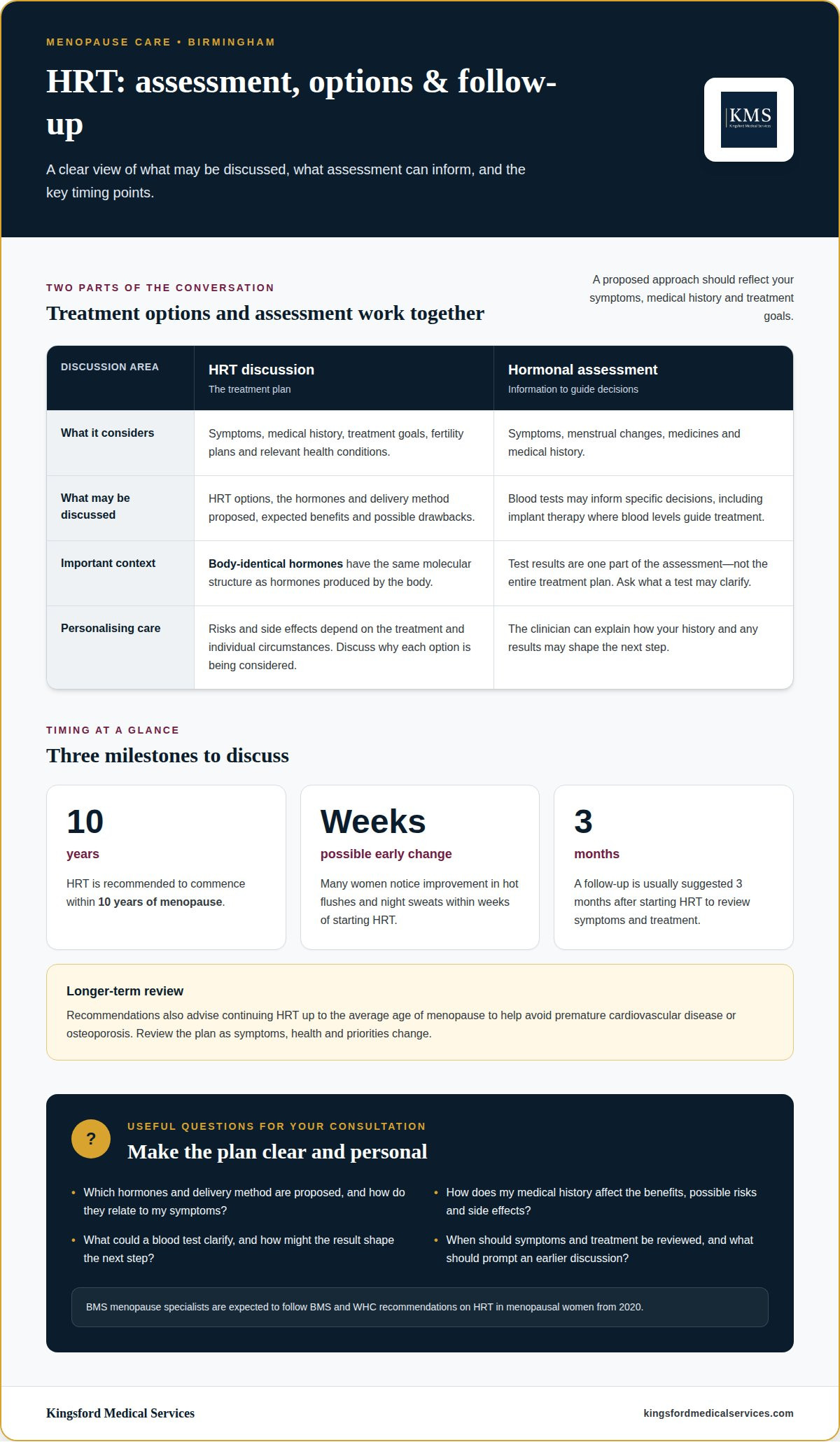
A consultation considers symptoms, medical history and treatment goals before discussing hormone replacement therapy (HRT). The proposed approach should be tailored to the individual, including fertility plans and relevant health conditions.
Hormone replacement therapy options
HRT replaces hormones and may use body-identical hormones, which have the same molecular structure as hormones produced by the body. Ask which hormones and delivery method are proposed, and how they relate to your symptoms and medical history. Many women notice improvement in hot flushes and night sweats within weeks of starting HRT. Discuss expected benefits and possible drawbacks together.
Hormonal assessments
Assessment begins with a review of symptoms, menstrual changes, medicines and medical history. Blood tests may inform specific decisions, including implant therapy, where blood levels guide treatment. Results are one part of the assessment, not the entire treatment plan. The clinician can explain what a test may clarify and how the result could shape the next step.
HRT can cause side effects, and its risks depend on the treatment and the individual’s circumstances. Risks discussed for postmenopausal women over 51 don’t always apply to women under 51. At consultation, discuss your health history, possible effects and the reason for each option before deciding.
Timing also matters. HRT is recommended to commence within 10 years of menopause, and many women notice changes in hot flushes or night sweats within weeks. A follow-up is usually suggested 3 months after starting HRT, allowing symptoms and treatment to be reviewed. Recommendations also advise continuing HRT up to the average age of menopause to help avoid premature cardiovascular disease or osteoporosis. Review the plan as symptoms, health and priorities change.
BMS menopause specialists are expected to follow the BMS and WHC recommendations on hormone replacement therapy in menopausal women from 2020. A consultation can still weigh symptoms, medical history and goals, with the plan reviewed as circumstances and priorities change.
Early or medically induced menopause
Menopause can occur earlier than the usual age range, including after surgery or cancer treatment. Removal of the ovaries may trigger menopause by changing hormone production. Pelvic radiotherapy or chemotherapy can also bring it on. Timing and effects depend on the treatment, the organs affected and medical history. If treatment is planned, raise fertility goals with the treating team beforehand to establish whether fertility-preservation options are relevant before treatment begins.
After treatment, note changes in periods, bleeding and symptoms such as hot flushes, sleep disruption or mood changes. These may differ from the gradual changes of natural perimenopause. A symptom record gives appointments a practical starting point: note when changes began, how they affect daily activities and any medicines you take. Discuss new or unusual bleeding with a clinician rather than assuming it is menopause-related.
A personalised review should connect the cause of menopause with current symptoms and future health priorities. Bring details of surgery, chemotherapy or pelvic radiotherapy, along with any available treatment summaries. Ask how your medical history affects the options, which benefits and possible risks apply, and when progress will be reviewed. If fertility remains important, include it in the conversation, even if treatment has already started. Clear questions help keep a complex plan focused.
Care may involve discussing hormone treatment, symptom management and alternatives if a particular option is unsuitable. The right approach depends on symptoms, health history and personal preferences, not a single plan for everyone. For someone in the Midlands, a dedicated consultation can also address the emotional impact of an unexpectedly early change. Note which symptoms affect work, relationships or sleep, then use those examples to guide follow-up and adjustments to care.
Which Birmingham menopause clinics are NHS or private?
In Birmingham, menopause care may be part of an NHS pathway or provided by a privately funded clinic. NHS care follows NHS services and referral arrangements, while private appointments are booked and paid for privately. The practical differences include how you access care, what the appointment covers and how follow-up is arranged. A menopause specialist clinic in Birmingham should explain its care pathway, including whether it provides assessment, treatment discussions and ongoing reviews.
Private services can offer a dedicated appointment focused on symptoms, medical history and treatment choices. One private clinic model uses a 60-minute first consultation, a symptom checker taking about 5 minutes, and follow-up appointments typically every 3-6 months. These figures describe that model, not every Birmingham service. Ask what the consultation covers and how changes to treatment are reviewed, rather than comparing appointment length alone.
Both NHS and private care depend on a clear account of your symptoms and health history. Before choosing a route, consider whether you need help with hormone therapy, contraception, fertility questions or symptoms following surgery or cancer treatment. Find out how the service handles ongoing reviews and communication with your usual healthcare team. The British Menopause Society’s online register lists current members who have demonstrated specialist competency; inclusion does not mean endorsement of their practice.
Waiting times vary by service and appointment capacity, so there is no single Birmingham-wide figure. The right pathway depends on the care you need and how you plan to access it. If you prefer private care, book a private GP appointment to discuss your health concerns and appropriate next steps. An NHS route may suit someone already receiving care through NHS services; a private clinic may suit someone seeking a privately arranged consultation.
Clinics accessed through NHS services and referral arrangements provide NHS care; clinics arranged and paid for privately provide private care.
Kingsford Medical Services
Kingsford Medical Services can support related health concerns that arise alongside menopause, while menopause-specific decisions remain with the appropriate menopause-care pathway. If sleep disruption affects daily life, Respiratory & Sleep Medicine Consultations can address sleep concerns. Psychiatry Services may be suitable when mood or mental wellbeing needs clinical attention.
For example, you might seek help with persistent sleep difficulties or emotional symptoms while discussing menopause treatment through your chosen care pathway. A clinician can assess the concern within the relevant service and explain suitable next steps. This offers a considered route for related needs without treating every menopause symptom as the same issue.
To discuss a related health concern, contact Kingsford Medical Services.
Choose a next step that feels manageable
Menopause care is not a single decision. Your priorities may change as symptoms, health needs and personal circumstances evolve. Write down the concern affecting you most and bring it to a suitable appointment. It might be a question about treatment, sleep, mood or wider health. A menopause specialist clinic in Birmingham can provide menopause-specific assessment, while other health concerns may need different clinical support.
Kingsford Medical Services offers Private GP Appointments, Respiratory & Sleep Medicine Consultations and Paediatric Services. These provide options for discussing relevant general health or sleep concerns, rather than replacing specialist menopause care. Being clear about what you need help with can make your next conversation more focused.
Contact Kingsford Medical Services to discuss your healthcare needs. Taking one clear next step can make the path ahead feel more manageable.
Frequently Asked Questions
Which menopause specialist clinics are in Birmingham, UK?
Birmingham has NHS menopause pathways and private specialist clinics, rather than one city-wide service. NHS care is arranged through NHS services; private clinics offer separately booked consultations. The right route depends on your preferred access and the assessment you need. Compare whether a service addresses menopause-specific concerns, provides follow-up and can coordinate care with your existing healthcare team.
What menopause services do Birmingham clinics offer?
Services may include assessment of menopause symptoms, discussion of treatment options and follow-up to review how care is working. Some appointments also consider how symptoms affect sleep, mood or everyday activities. Before booking, identify the main concern you want addressed, such as persistent sleep disruption or changes affecting work. This helps you decide whether the service suits your needs.
How do I find a menopause specialist near me in Birmingham?
To find a nearby option, compare services by location, access route and appointment format. A menopause specialist clinic in Birmingham may suit you if travelling into the city is practical; if you’re in Knowle or Solihull, you may prefer care closer to home. Consider whether you need a menopause-focused consultation or help with a related concern, then choose accordingly.
Which menopause treatments and HRT options do Birmingham specialists provide?
Options discussed may include hormone replacement therapy, body-identical hormones and, if HRT is unsuitable or not preferred, non-hormonal medical treatments. The choice depends on symptoms, medical history and personal priorities. Ask how the proposed approach will be reviewed, what changes to monitor and what alternatives are available if the first treatment does not suit you. A clear plan makes follow-up discussions more focused.
How do Birmingham menopause clinics compare on patient reviews and services?
Clinic reviews can help you assess communication and access. Compare services such as menopause assessment, contraception advice, fertility discussions and follow-up.



Comments