
Corporate health screening packages in the West Midlands
The most comprehensive screening package isn’t automatically the most suitable. When comparing corporate health packages in the West Midlands, consider the screening offered, the needs it addresses and how employees will access care. This helps employers focus on relevant support rather than adding tests without a clear purpose.
Choosing a package involves more than deciding which tests to include. Employers also need a clear picture of package tiers, where screening takes place, how booking works and whether workplace physiotherapy is part of the support they’re exploring.
This guide explains the screening tests and options employers may encounter, and how to think about matching them to workplace needs. It also covers locations, the booking process and workplace physiotherapy, so you can understand the choices before deciding on a suitable next step.
Table of Contents
Physical examinations and diagnostic tests
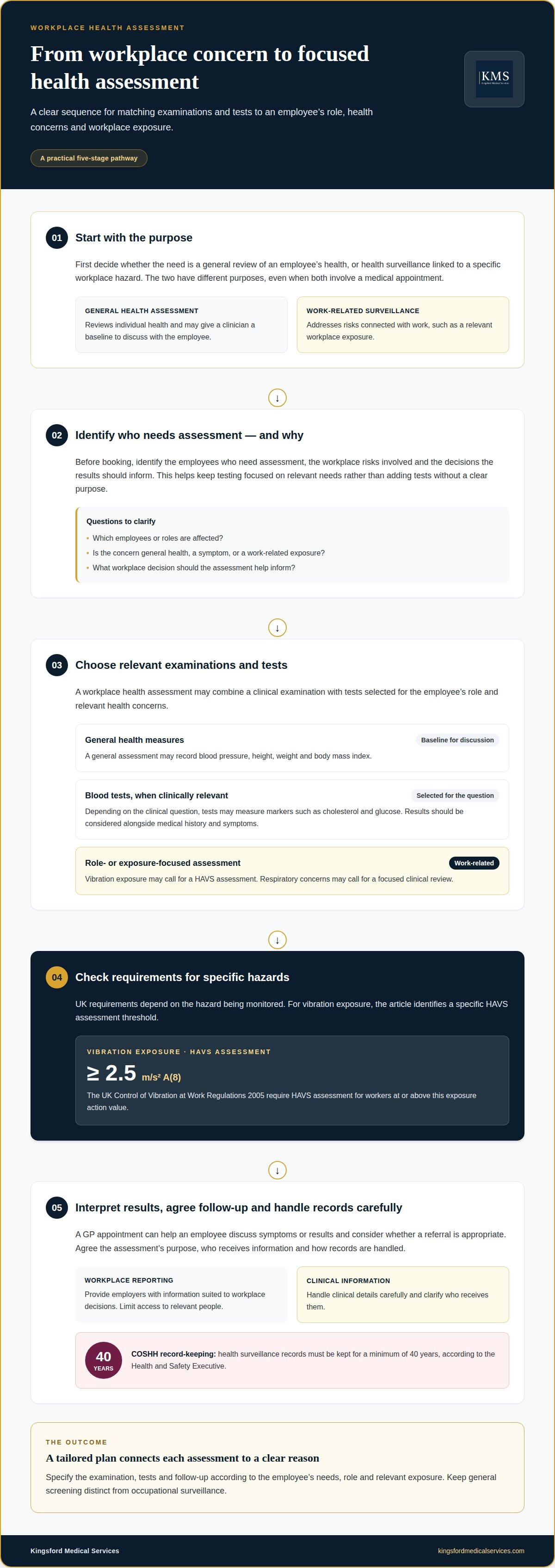
A workplace health assessment may combine a clinical examination with tests selected for an employee’s role and relevant health concerns. Start by distinguishing a general health assessment from surveillance linked to a specific workplace exposure.
Biometric tests and blood panels
A general assessment may record blood pressure, height, weight and body mass index, giving a clinician a baseline to discuss with the employee. Depending on the clinical question, blood tests may measure markers such as cholesterol and glucose. Consider whether each test is relevant to the employee’s needs rather than adding tests without a clear purpose. Results should be interpreted alongside medical history and symptoms.
Additional tests and screenings
Further screening depends on the role and exposure. For example, workers exposed to vibration may need a HAVS assessment, while respiratory concerns may call for a focused clinical review. A GP appointment can help an employee discuss symptoms or results and consider whether a referral is appropriate. Keep general screening distinct from occupational surveillance: one reviews individual health, while the other addresses risks connected with work.
Before booking, identify which employees need assessment, the workplace risks involved and what decisions the results should inform. A tailored plan can then specify the examination, tests and follow-up. Employers should receive information suited to workplace decisions, while clinical details are handled carefully and access is limited to relevant people. This keeps testing focused and gives each employee clear next steps.
Which West Midlands providers offer corporate health checks and occupational health services?
When planning provision, distinguish general health checks from occupational health services. A private clinic can provide individual consultations and diagnostic discussions. An occupational health provider focuses on work-related assessments, workplace risks and advice for management. The right service depends on whether the need is personal screening, work-linked surveillance or both.
For example, an employee seeking a general review may benefit from a health check with a clinician. A worker reporting symptoms linked to a particular task may need an occupational assessment focused on that role. These have different purposes, even when both involve a medical appointment. Define the need first, then choose the type of service that matches it.
Compare providers using practical service details rather than package names alone:
Clinical scope: identify whether the service covers health checks, occupational assessments, or both.
Delivery: establish whether appointments take place at a clinic, at the workplace, or through remote consultation.
Reporting: clarify what information is returned to the employer and what remains confidential clinical information.
Follow-up: understand how the provider handles recommendations, further assessment and referrals.
These points help distinguish a screening appointment from occupational advice. A blood test, for instance, may contribute to an individual health review, while a role-specific assessment considers the employee’s work and relevant exposure. The provider’s clinical scope and reporting process should match the decision the employer needs to make.
To organise a comparison, record the workforce concern, the employees affected and the action the results should inform. Then match each requirement to the provider’s stated service, appointment format and reporting approach. This can reveal gaps, such as screening without follow-up or occupational advice without the clinical assessment employees need. It also helps employers commission focused support instead of choosing a broad package by name alone.
Private options include clinics offering individual consultations and diagnostic discussions, as well as occupational health providers offering work-related assessments, workplace risk reviews and management advice. The suitable option depends on whether the need is personal screening, work-linked surveillance or both.
Private clinics provide individual consultations and diagnostic discussions, while occupational health providers focus on work-related assessments and management advice. Choose the type of service according to the workforce concern and the support required.
What services are included in corporate health packages, such as screenings, vaccinations and wellbeing support?
Package contents vary, so connect each service to a workforce need. When comparing corporate health packages in the West Midlands, consider screening, vaccination arrangements and wellbeing education as separate elements. The scope should explain which appointments are included, what employees receive and how follow-up is arranged.
Screening may include a clinician consultation and a review of relevant health measures. Some health-screen tiers include an express GP consultation lasting 15 minutes. Employees can use that time to discuss results or personal health concerns with a clinician. This individual clinical conversation differs from occupational advice about a role or workplace risk.
Vaccination support may be included when it suits the workplace and employees’ needs. A programme should explain which vaccinations are offered, how staff can access them and how appointments are arranged. The right approach depends on the workforce and the programme’s purpose. Treat vaccination as a defined option rather than assuming it forms part of every package.
Wellbeing support can add practical education alongside individual appointments. Clinician-led masterclasses can help employees understand common health concerns and make informed wellbeing decisions. For example, a session might help staff recognise when to seek clinical advice or prepare questions for a GP appointment. Employers can choose subjects relevant to their teams.
When shaping corporate health packages in the West Midlands, map each service to its intended outcome:
Screening: define the assessment and how employees receive results.
Vaccinations: specify the programme and appointment arrangements.
Wellbeing: choose relevant education, such as clinician-led sessions.
Follow-up: explain how employees can discuss findings or pursue further care.
This structure makes package tiers easier to assess. An employer prioritising individual screening may need a different combination from one focused on education and vaccination support. Clear inclusions help employees understand what to expect and help employers judge whether each element addresses a defined workplace need.
How do corporate health packages differ by company size and employee numbers?
Employee numbers affect how a programme is organised, but headcount alone doesn’t determine its clinical scope. A small team may prioritise access to individual consultations, while a larger workforce may need coordinated scheduling and consistent reporting. In both cases, the package should reflect employees’ roles, working patterns and identified health needs.
Group employees according to relevant needs rather than treating the whole workforce as one clinical group. Office-based staff, for example, may need a different assessment pathway from employees whose duties involve specific workplace exposures. A mixed workforce may therefore need several options, with clear criteria for who should use each one.
Appointment arrangements also change with scale. A smaller organisation might arrange appointments individually, while a larger employer may need planned sessions or a booking process that lets employees choose suitable times. The provider’s capacity, clinic location, employee travel and shift patterns all affect what is practical. Include these details in the booking plan before selecting package components.
Use a simple planning sequence:
Map the workforce: record roles, locations and working patterns.
Identify needs: separate general health checks from role-related assessments.
Set priorities: decide which groups need screening, consultations or follow-up.
Plan delivery: choose appointment arrangements that employees can access.
For a growing business, review the package when teams, locations or work duties change. A programme designed for one site may need different scheduling if employees become dispersed. In a large organisation, consistent eligibility rules help employees understand which service applies and reduce uneven access between departments.
Rather than choosing a tier based only on workforce size, define the service mix and delivery model together. This helps clarify whether the package is designed for individual clinical access, targeted assessments or coordinated support across teams. To discuss the clinical needs behind your workforce plan, get guidance on employee health needs.
Kingsford Medical Services
Kingsford Medical Services supports employees who need individual clinical care alongside an employer’s wider health planning. Private GP Appointments provide a way to discuss personal health concerns, while Respiratory & Sleep Medicine Consultations address relevant specialist needs.
Employees may also benefit from Paediatric Services or Vitamin B12 Testing & Treatment, depending on their circumstances. These clinical services complement workplace planning; they are not a substitute for role-specific occupational health assessments or a complete employer screening programme.
Employers can consider Kingsford Medical Services when staff need private consultations or specialist care as part of broader wellbeing planning. To discuss the available clinical services, contact Kingsford Medical Services.
Plan your next step with confidence
Use workforce priorities to shape a practical plan, then decide how employees will access the clinical support they need. A clear approach to corporate health packages in the West Midlands connects workplace planning with individual care without treating every employee’s needs as identical.
For employees who need personal clinical support, Kingsford Medical Services offers Private GP Appointments, Respiratory & Sleep Medicine Consultations and Paediatric Services. These options can sit alongside an employer’s wider wellbeing planning, with care focused on the individual’s concern.
Discussing your requirements is a straightforward next step. Contact Kingsford Medical Services to discuss options and consider how its clinical services may support your employees.
Frequently Asked Questions
Do you offer a range of health screening packages?
Kingsford Medical Services provides private GP appointments and specialist consultations for employees with individual clinical concerns. These services can support a workplace wellbeing approach, but are distinct from an employer-wide occupational health programme. For example, an employee could use a GP consultation to discuss a health concern while the employer arranges separate provision for role-related assessments.
What are the benefits?
Corporate healthcare can give employees a defined route to discuss health concerns and access relevant clinical support. A clear programme also helps employers explain what support is available and how staff can use it. For example, an employee who needs a specialist opinion may benefit from an appropriate consultation, while the employer plans wider wellbeing support around workforce needs.
What corporate health packages are available in the West Midlands?
Options vary between providers and may include individual health checks, diagnostic screening, vaccination arrangements or wellbeing support. Employers can decide which elements fit their workforce and how staff will access them. In Knowle, Solihull and the wider West Midlands, Kingsford Medical Services provides private GP and specialist healthcare for individual clinical needs, complementing broader workplace planning.
Do providers offer on-site workplace health checks across Birmingham and the wider West Midlands?
Some workplace health services take place on-site, while others use clinic appointments or remote consultations. The delivery method depends on the provider and service. Kingsford Medical Services is based in Knowle, Solihull, and offers in-person and e-consultation options for its healthcare services. Employers planning screening across Birmingham, Nuneaton and the wider West Midlands should consider location and appointment format.



Comments