
Confidential health checks in the West Midlands
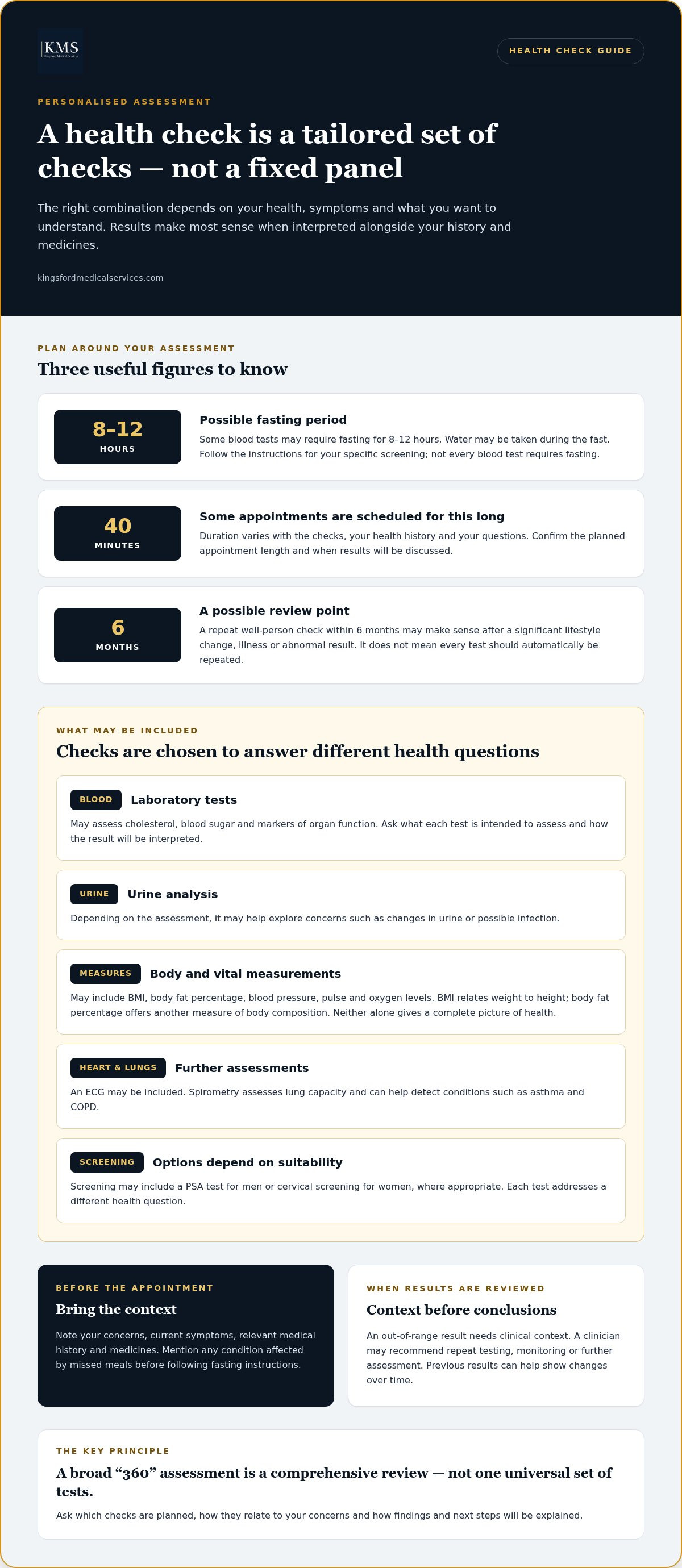
A health check is not a fixed panel of tests. A confidential health check in the West Midlands may include BMI and body fat assessment, blood pressure, pulse and oxygen checks, an ECG or spirometry. The checks selected depend on your health and what you want to understand. Screening may also include tests such as PSA or cervical screening where appropriate.
It’s understandable to want to know what will happen and how your personal health information is handled. This guide explains which checks may be included, how an appointment can be tailored to your needs and what to expect when your results are reviewed. It also explains how confidentiality fits into the process, so you can approach a health check with greater clarity and peace of mind.
Table of Contents
Private health check appointments and personalised care
A confidential health check in the West Midlands should start with your priorities, not a one-size-fits-all test list. At booking, note your main concerns, current symptoms, relevant medical history and any medicines you take. For example, someone wanting to understand persistent tiredness may need a different discussion from someone seeking general preventive screening. These details help shape the appointment and the recommendations that follow.
Private clinics, pharmacies and mobile services offer routes to health screening in the West Midlands. The checks and clinical follow-up vary by setting, so consider whether you need a clinician to discuss symptoms and interpret results, rather than a test alone. Private appointments can generally be arranged directly, without a referral as a universal prerequisite. When comparing appointment options, establish what the assessment covers and how the results will be explained.
Preparation depends on the selected tests. Some blood tests may require fasting for 8-12 hours before the appointment, and water may be taken during the fast. Follow the preparation instructions provided for your specific screening rather than assuming every blood test needs fasting. If you take regular medicine or have a condition affected by missed meals, raise this before following fasting instructions. Arriving prepared helps avoid delays or the need to rearrange a test.
Allow enough time for both the assessment and discussion. Appointment duration varies with the number of checks, the health history to review and whether you have questions. Some health-screen appointments are scheduled for 40 minutes. Use the booking conversation to establish the planned length and whether results are discussed during the same visit or separately. A thorough appointment should leave space to explain your concerns, review relevant findings and clarify recommended next steps.
Cancellation arrangements are set by each service, so read the terms when booking. If illness, travel or another commitment prevents you from attending, notify the service promptly and ask how to rearrange. Missing an appointment can affect access to the allocated slot; cancellation procedures and any applicable charges depend on the stated terms. Keep your booking confirmation and preparation instructions together, then check the appointment time and location before setting off.
A repeat assessment may be useful when circumstances change. A repeat well-person check within 6 months can make sense after a significant lifestyle change, illness or abnormal result. This is a prompt to review what has changed and whether follow-up is appropriate, rather than to repeat every test automatically. Bring previous results or a clear account of the earlier finding to help the clinician compare information and give relevant recommendations.
What’s Included in a Health Check?
A health assessment can combine laboratory tests, physical measurements and screening. The right mix depends on the questions the assessment is intended to answer.
Blood and urine tests
Blood tests can assess cholesterol, blood sugar and markers of organ function. Their value depends on why they are being done and how results are interpreted alongside symptoms, medical history and medicines. Ask which tests are included and what each is intended to assess. Urine analysis can also provide information about concerns such as changes in urine or possible infection, depending on the assessment.
A result outside the expected range needs context, not guesswork. A clinician can explain what the finding may mean and whether it calls for repeat testing or further assessment. For example, cholesterol results are considered alongside other relevant health information before recommendations are made. Bring previous test results if available, so the discussion can focus on changes over time rather than a single reading.
Health measurements and assessments
Measurements may include BMI and body fat percentage, as well as blood pressure, pulse and oxygen levels. BMI relates weight to height, while body fat percentage offers another measure of body composition. Neither measurement alone gives a complete picture of health. A useful assessment explains how the figures relate to your circumstances and which findings, if any, merit follow-up.
A “360” health assessment describes a broad review, not one universal set of tests. The included measurements can vary with the assessment’s purpose and the person’s concerns. Look for a clear explanation of the checks being performed, how they relate to your health history and how results will be discussed. If blood sugar or weight is a particular concern, a health assessment focused on your concerns can help guide that conversation.
Screening options may also be discussed. Depending on suitability, cancer screening may include a PSA test for men or a cervical smear test for women. Spirometry may assess lung capacity and help detect conditions such as asthma and COPD. These tests are not interchangeable: each addresses different health questions, so the reason for including one should be clear.
Follow-up depends on what the assessment finds. A clinician may recommend another test to clarify a result or a specialist assessment if a concern needs focused expertise. Ask how recommendations will be explained and who will discuss the next step. Results are most useful when they lead to a clear plan, whether that means monitoring, further investigation or practical changes to discuss with a clinician.
Doctor-led preventive health screening in Birmingham
A doctor-led assessment connects screening choices with your health history, concerns and next steps. In Birmingham and across the West Midlands, consider whether you want preventive advice, investigation of symptoms or both.
Screening packages and prices
Packages can group checks such as blood tests, physical measurements and a results discussion. Compare what each assessment covers, whether a doctor reviews findings, and how recommendations are provided. Some packages include a 15-minute GP appointment to review results and give medical advice. The price depends on the tests selected and the level of clinical review, and is given after a quote request.
Before choosing a package, ask what it is designed to assess. A broad screening panel may suit someone seeking a general overview, while a focused assessment may be more relevant for a specific concern, such as diabetes risk. Package names alone do not tell you which tests are included. Check that the description identifies the measurements, blood tests and follow-up discussion, so you know what the assessment involves.
Finding a confidential check locally
You can arrange a confidential health check through a private clinic in Birmingham or elsewhere in the West Midlands. Choose an appointment that includes a doctor’s review if you need symptoms, medical history or results considered together. A test-only service may answer a narrow question, but it does not provide the same breadth of clinical discussion.
Preventive screening may be worth discussing if you have a family history of chronic illness, ongoing symptoms, or want to monitor health and fitness. An annual check-up is another reason people consider screening. For people in their 30s with low risk, a well-person check every 2-3 years is typically sufficient. The interval should reflect changing health circumstances and previous findings.
Heart rhythm assessment and cancer-screening advice address different questions. An ECG records the heart’s electrical activity, while a doctor can discuss whether further assessment is appropriate. Screening options may include a PSA test for men or cervical screening for women. The suitable option depends on the person’s circumstances and the purpose of the appointment, not just the package name.
Heart health and diabetes screening can bring related risk factors into one discussion. Blood pressure, cholesterol and blood sugar results help frame it, alongside family history, symptoms and lifestyle. A doctor can explain which findings call for practical recommendations or further investigation. Bring a record of your medicines and previous results; these details make the review more specific and help support a clear plan after screening.
For peace of mind, look for a clinic process that includes a clear explanation of results, not just the tests. Ask how findings are discussed and what happens if follow-up is recommended. A well-structured assessment links each measurement to its purpose and gives you a useful basis for making informed decisions about your health.
Blood pressure, ECG, pulse and oxygen checks
A health check may combine blood pressure measurement, an ECG, and pulse and oxygen checks. Each records a different aspect of your health, so their value comes from interpreting them together. For example, a blood pressure reading describes pressure in the arteries, while an ECG records the heart’s electrical activity. Together, these measurements add useful context to a doctor’s discussion of your overall health.
Blood pressure is measured using an inflatable cuff, usually placed around the upper arm. The result describes pressure as blood moves through the arteries. A single reading is one piece of information, not a complete account of heart health. Tell the clinician about relevant symptoms and medicines, and ask what the reading means in light of your history and other findings.
An ECG uses electrodes attached to the skin to record electrical signals from the heart. It provides information about heart rhythm during the recording. The clinician can explain what the trace shows and whether further assessment is recommended. An ECG and a pulse check are different: the ECG records electrical activity, while a pulse measurement assesses the heartbeat felt at the wrist or another point.
Oxygen levels can be checked with a small sensor placed on a fingertip. The reading estimates oxygen saturation in the blood, while a pulse measurement records the rate of the heartbeat. These checks may be done alongside blood pressure measurement during a broader assessment. If you have a respiratory concern, describe your symptoms and when they occur, so the findings can be considered in context.
A full-body health check does not test for every possible condition. It can bring together selected measurements, blood tests and a clinical discussion, guided by your concerns and health history. Blood tests may assess cholesterol, blood sugar or markers of organ function. The useful question is which tests address your needs and how the results will inform recommendations.
Blood and urine testing provide different kinds of information. A blood test can measure substances in the bloodstream, while urine analysis examines a sample for findings relevant to the assessment. Neither automatically replaces the other. Ask what each test is intended to assess, how to prepare, and how results will be explained. Some blood tests require fasting for 8-12 hours; water may be taken while fasting.
Before testing, list your medicines, symptoms and previous results. This helps the clinician interpret measurements and decide whether a finding needs further investigation. An ECG result, pulse reading and blood test, for example, may each provide different information. A thorough review connects those results to your health history rather than treating each figure as an isolated verdict.
After checks are carried out, ask which results need follow-up and what that involves. Recommendations may include repeat testing or a more focused assessment, depending on the findings. If vitamin B12 is being investigated, a blood test can inform a discussion about testing and treatment. Clear explanations help you understand the purpose of each result and the next step in your care.
Confidentiality and GDPR data protection
A confidential health check involves sharing personal details, symptoms and test results. Before booking, read the clinic’s privacy notice and see how it describes the use of health information. Look for the stated purposes, who may access records, how information is stored and how to raise a concern. These details help you understand the practical arrangements before discussing sensitive matters.
GDPR is the familiar name for the data protection framework relevant to personal information. For a health assessment, consider how the information you provide will be handled from booking through results and follow-up. For example, ask whether appointment reminders arrive by text or email and whether messages reveal sensitive details. Choose a communication method that suits your circumstances.
At the appointment, tell the clinician which concerns you want to discuss and what information feels especially private. You can explain relevant lifestyle factors, symptoms or family history without sharing unrelated details. If a result suggests a possible disease or the need for a specialist opinion, ask what information would be shared, with whom and for what purpose.
Receiving results may involve more than one step. A blood test, for instance, produces information that needs clinical interpretation and a clear follow-up plan. Ask how results will be communicated, who will discuss them and how to arrange a conversation if you need clarification. Keep result messages and appointment details somewhere private, particularly if you share devices or email accounts.
A privacy notice can help you understand how records are managed, although the language may feel technical. Note any terms you want explained, such as record retention, access or sharing with another healthcare professional. A practical question is: “Who can see my results, and how will they be used?” The answer should make the process clear enough for you to make an informed decision.
Confidentiality also matters when booking for someone else. A parent arranging an appointment for a child, for example, should clarify how the child’s information and appointment communications are handled. If you are booking for yourself, provide accurate contact details and state any communication preferences. These steps help prevent sensitive information from reaching the wrong person.
Take time to raise privacy concerns before discussing test results or personal circumstances. Understanding who handles your information can make it easier to speak openly about symptoms, lifestyle and family history. To discuss your health concerns and appointment needs, arrange a confidential health appointment.
Kingsford Medical Services: Private GP Appointments
Kingsford Medical Services offers Private GP Appointments for people who want to discuss health concerns and possible next steps. A GP can review your symptoms and health history, then advise whether further assessment or testing is appropriate. This can be useful if you have questions after screening or need to talk through a result.
For more focused needs, the clinic also offers Respiratory & Sleep Medicine Consultations, Paediatric Services, and Vitamin B12 Testing & Treatment. The relevant appointment depends on the concern you want addressed, such as respiratory symptoms or questions about B12 testing. Bring any previous results and a list of medicines to support a focused discussion.
Take the next step with confidence
A confidential health check in the West Midlands can be the starting point for a considered conversation about your health. Before booking, think about the concern you most want to address and what would help you feel informed afterwards. A clear question gives your appointment a useful focus, whether you’re seeking preventive advice or support with a particular symptom.
Kingsford Medical Services offers Private GP Appointments, Respiratory & Sleep Medicine Consultations and Paediatric Services. These services provide a way to discuss personal or family health concerns with an appropriate clinician. You can share what matters to you and explore relevant next steps without needing to have every question resolved in advance.
If you’re ready to discuss an appointment, contact Kingsford Medical Services. Taking that first step can help you approach your health questions with greater clarity and reassurance.
Frequently Asked Questions
Are these tests available for Free on the NHS?
Kingsford Medical Services is a private clinic; its health checks are not NHS-funded. NHS screening is separate and follows its own pathways, which can differ in purpose, eligibility and timing. A private assessment lets you arrange a health discussion and selected testing outside NHS-funded consultations. If you have received an NHS screening invitation, follow its instructions, as that programme may not cover the same checks as a private assessment.
Do you offer a range of health screening packages?
Kingsford Medical Services offers health and wellbeing checks alongside Private GP Appointments. The right assessment depends on what you want to discuss, such as preventive health or a particular concern. Before booking, consider which questions matter most and bring relevant medical history or previous results. This gives the appointment a clear focus and helps the clinician discuss suitable next steps.
How will I receive my results?
Your results need to be understood in context, not read as isolated figures. Discuss how each finding relates to your health concerns and whether it changes your next steps. Keep a copy of any report or result shared with you, so you can refer to it during later appointments. If a result is unclear, write down your question and raise it during the follow-up discussion.
Is my information confidential?
Health information is confidential and should be handled in line with data-protection requirements. A clinic’s privacy information explains how personal details and medical records are used and managed. You can also state how you prefer to receive appointment communications, particularly if you share a phone or email account. Before your appointment, decide which concerns you want to discuss and share relevant details with the clinician.
What Are The Benefits?
A health check gives you a structured opportunity to discuss concerns that might otherwise go unaddressed. It can also help you decide which questions deserve attention first, especially if you have several symptoms or a family history to discuss. For example, you might ask how a finding relates to your wider health, then agree practical next steps with a clinician.
What is a confidential health check and what does it include?
A confidential health check is a private clinical assessment where you discuss health concerns and consider relevant checks with a clinician. It may combine a conversation, physical measurements and selected tests, depending on the appointment’s purpose. Someone seeking preventive advice, for example, may have different priorities from someone with a specific symptom. The clinician can explain the relevance of findings and discuss follow-up options.
How do I book a confidential health check in Birmingham, Coventry, Wolverhampton or nearby?
To arrange a confidential health check in the West Midlands, use Kingsford Medical Services’ online booking route or contact the clinic. Appointments take place in Knowle, Solihull, serving local areas including Birmingham and Nuneaton. If travelling from Coventry or Wolverhampton, consider the clinic location when choosing an appointment. Have your preferred appointment details and the main reason for the check ready when booking.
What information and tests are included in a health check, and how long does it take?
The information and tests depend on the assessment’s purpose and your health concerns. A clinician may review your relevant history, discuss symptoms and select appropriate measurements or tests. Appointment time also varies with the scope of the assessment and results discussion. A routine GP appointment is a separate service from a health check, so its duration does not necessarily represent the time required for screening.



Comments